


On 11 November, IQS hosted the fourth conference organized with the Beauty Cluster on research and innovation in the cosmetics sector. Under the title “StemBeauty: the sustainable future of cosmetics with plant stem cells,” the event was sponsored by the companies Provital and Biogründl and welcomed wide attendance.
With widely successful attendance, IQS and the Beauty Cluster recently organized a conference on the future of sustainable cosmetics based on the use of plant stem cells, featuring sponsorship by the companies Provital and Biogründl.

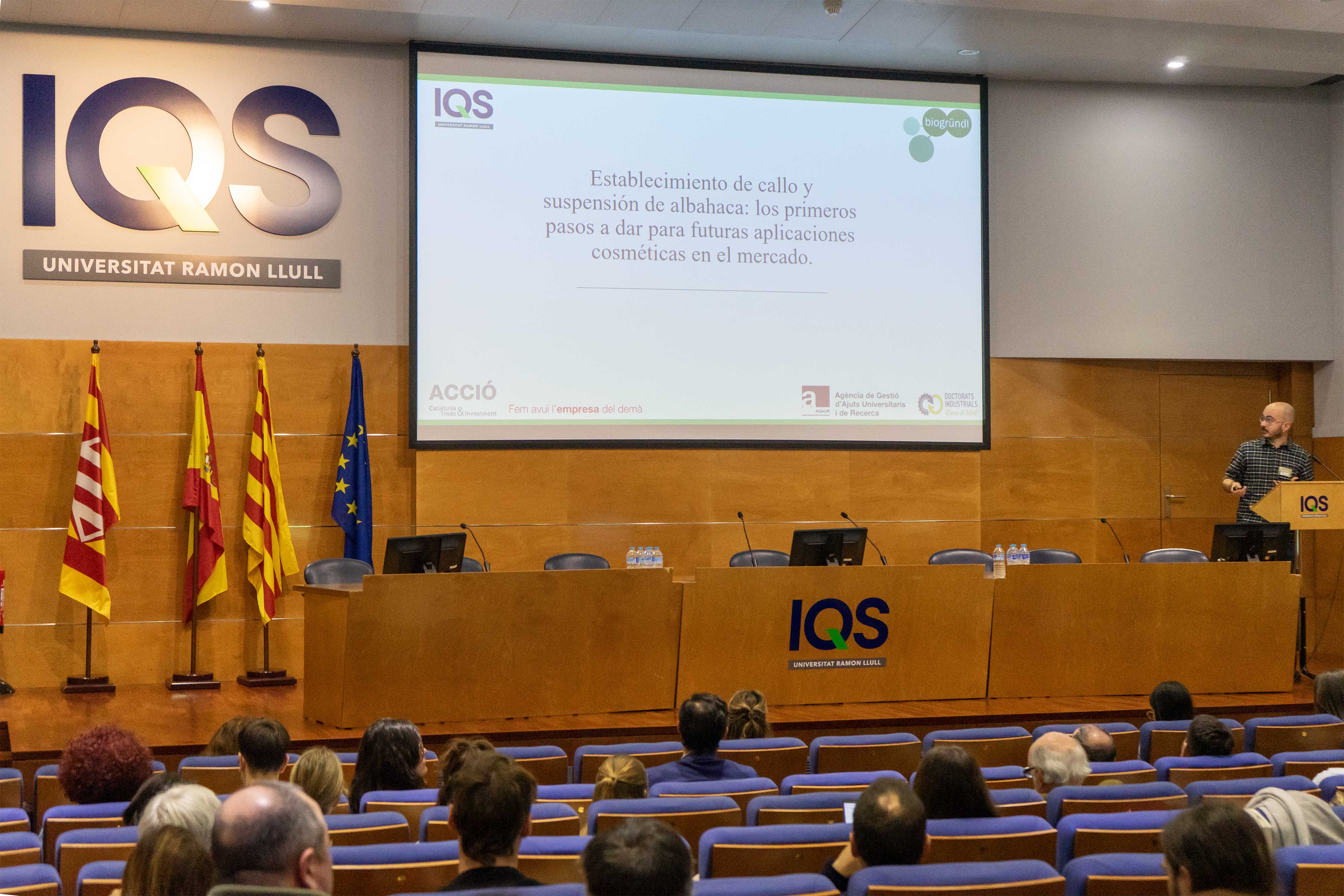
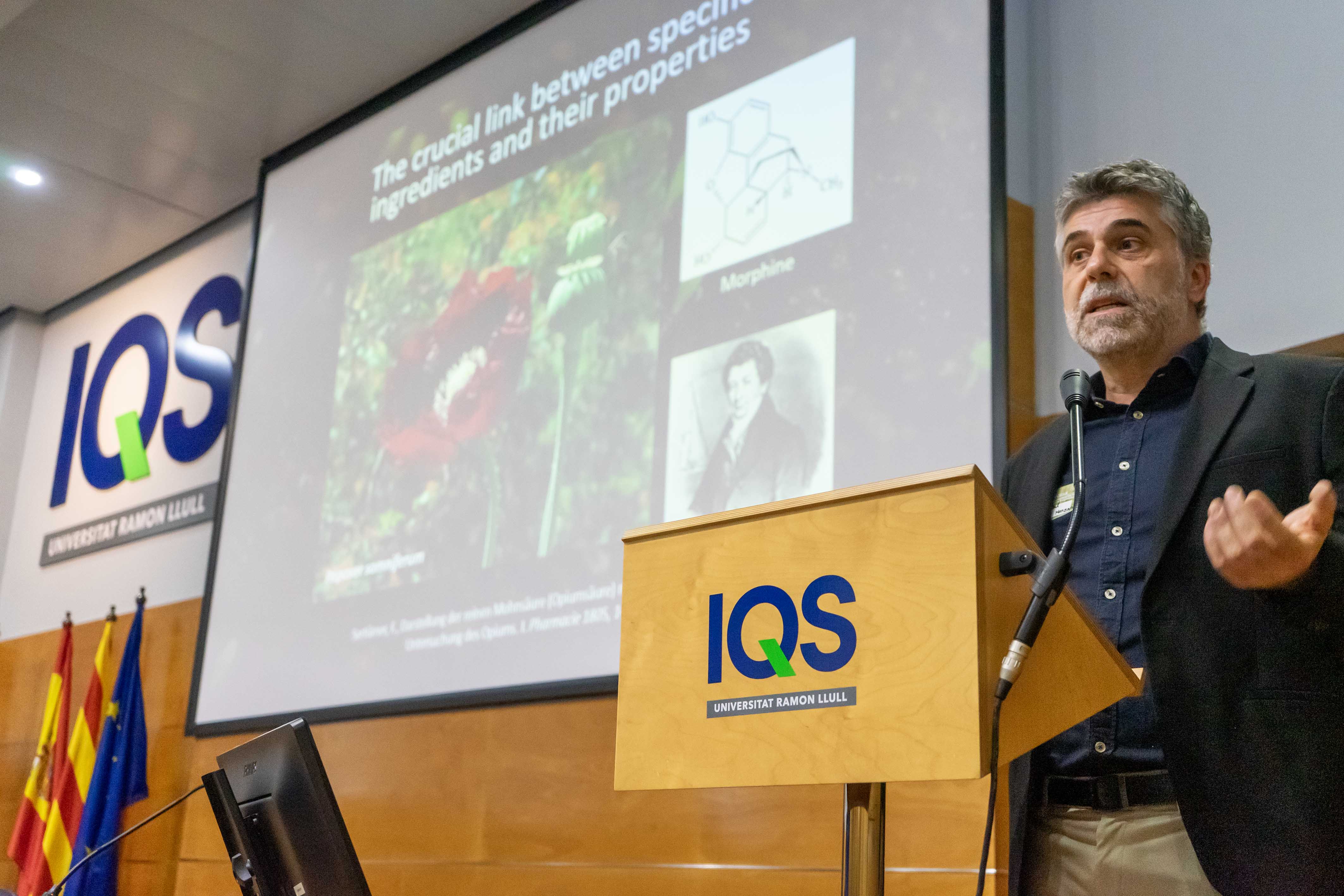


The objective of this conference was to showcase the vast potential of plant stem cells for developing new cosmetics solutions, their impact on sustainability for the sector, and the associated innovation challenges faced by companies, along with the possibility of transferring technology from higher education to industry.
The institutional welcome was given by Dr Nuria Vallmitjana Palau, director of the IQS Tech Transfer division, who thanked the Beauty Cluster for co-organizing the event, and Provital and Biogründl for their sponsorship, “in an event in which we aim to highlight the great innovative potential of stem cells and examples of knowledge transfer from universities to businesses.”
After an initial presentation by Dr Celia Campos from Muttulab on the regulatory framework and challenges regarding the use of stem cells in cosmetics, the first part of the event featured presentations by Dr Martí Lecina Veciana, researcher with the Department of Bioengineering at IQS, who spoke about the difficulties and technical challenges with applying plant stem cells, from the generation and induction of callus, to the scaling process in bioreactors based on the experience of his research group. Next, Dr David Manzano Alias, from the company Provital, contributed by sharing his company’s experience in the use of biotechnology to achieve greater control, efficiency, quality, and sustainability in cosmetics production, with four success stories about sustainable production from plant stem cells. Then came a presentation by Miquel Vilafranca i Tello, a PhD in Bioengineering student at IQS who is conducting an industrial doctorate with the company Biogründl, on the establishment of the callus and suspension of basil, its maintenance, the methodologies used to establish the suspension, the elicitation of the cells, and the final scaling in a bioreactor.
The second part of the conference featured more contributions from examples of innovation applied in the use of plant stem cells, such as the presentation by Dr Cristina Thiebault Estrada, with the company Cobiosa, on examples of the use of plant stem cell cultures as tools for sustainably obtaining metabolites, standardized production, lower consumption of resources, and greater sustainability, as well as some of the advantages of the use of these cells. Other examples were provided by Dr Celia Etxebarria with Croda,and Dr Óscar Expósito with Vytrus Biotech, who spoke about advances in technology for the use of plant stem cells and their exosomes or extracellular vesicles as a sign of the ability of plant biotechnology to achieve innovative and sustainable cosmetic assets.
The event closed with a roundtable discussion in which all the speakers participated. During this discussion, issues arose related to how to help consumers understand the difficulty of using these complex technologies, the reduction in costs, the great challenge of protecting the environment, how to quantify the sustainability of the processes, the large scope of collaboration between higher education and industry, and the challenges faced in development times.
As a final conclusion, plant stem cells have already become a very effective cosmetics tool that are here to stay despite the fact that they are still very unknown structures and overcoming the great challenge of being able to manufacture them on an industrial scale remains necessary.
Sponsored by

Colaboradores

