


According to the 2025 edition of the Regional Innovation Scoreboard (RIS) by the European Commission, the region of Catalonia has climbed positions in the European innovation ranking, reaching among the 75 most innovative regions in Europe. Catalonia has maintained its strength in the “strong innovator” category and made a significant leap from 82nd to 72nd place, with 246 regions analysed.
"In Europe, we must invest in research and innovation and align the needs we have as a society"
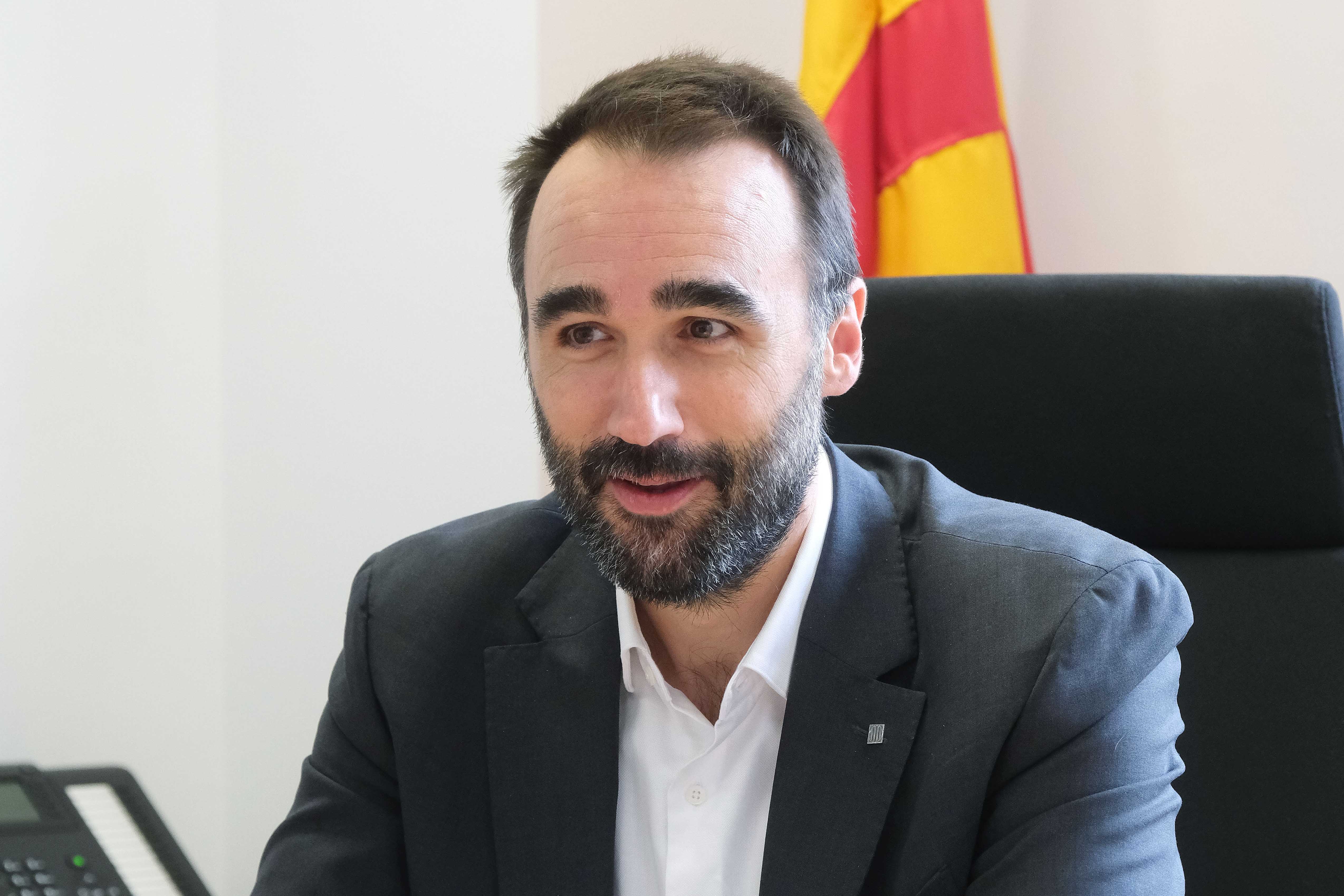
Interview with Dr Javier Selva, Director General of Transfer and the Knowledge Society with the Government of Catalonia
In this interview, we talk with Dr Javier Selva, Director General of Transfer and the Knowledge Society with the Department of Research and Universities under the Government of Catalonia, about the current and future situation of all the transfer and innovation agents in the Catalan network.
Dr Selva, how could we define the current technology transfer situation and are people aware of our region?
Technology transfer is a source of wealth generation and by transferring knowledge we make it an essential driver for transforming society, both socially and economically, and this is one of the essential objectives. We have just returned from attending an innovation summit in Japan, an example of how, with knowledge and technology, very important social wealth can be generated. In Europe, we must try to invest in research and innovation in order to align the needs we have as a society to transfer and generate wealth, move from innovation to marketing, and help startups grow.
We are in a moment in which knowledge transfer allows us to position ourselves as a more advanced society, achieve greater economic growth, and achieve better quality of life for everyone in the end. For me, this represents the great importance of achieving solid technology and knowledge transfer in general.
“Knowledge transfer allows us to position ourselves as a more advanced society”
When we talk about knowledge transfer, does it go beyond patent licenses?
According to the 2025 Regional Innovation Scoreboard (RIS) indicators, patents are one of the essential transfer tools and, indeed, this means not only applying for them, but also licensing them. One of the topics discussed at the Japan summit was the fact that Catalonia is very good at applying for patents, but the indicators in terms of licenses are very low. This means that we need effective tools to ensure that the knowledge we are protecting can be licensed and transferred to the market.
“Effective tools are needed to ensure that knowledge can be licensed and transferred to the market”
But we need to pay special attention to it, because the RIS-25 indicators tell us that in Catalonia we are declining in terms of patent applications and we need some strategies to encourage them. Again, we need to find ways not only apply for patents to protect knowledge, but we also need to find ways to license them in the future.
We have other elements for transferring and protecting knowledge, such as trademarks or designs, where we have seen significant increases. And, going further, we can talk about alliances between companies and universities or research centres where we see joint developments, or the generation of spinoffs by universities themselves, but paying special attention to the speed of generation and not trying to do things too soon by validating the technology with proofs of concept that can guarantee greater product stability. The Catalan Agency for the Management of University and Research Grants (AGAUR) promotes the Knowledge Industry programmes, designed to reach technologies in the TRL 4 to 5 environment, which help to study the opportunity to choose between creating a startup or spinoff or waiting.
How would you define the level of transfer from Catalan universities compared to other universities in Spain or Europe?
We could frame the question beyond the university environment and consider the entire system as a whole. The data published in 2025 for the EC’s RIS report places Catalonia at number 72 in the European ecosystem, with a very positive trend!
“Currently, we contribute significantly to the innovative growth of Spain and Europe”
Not only this, but we are now leading growth across Spain, contributing even more prominently to the innovative growth of Spain and, therefore, of Europe. And I would like to point out a couple more aspects. The best thing would be to be an “innovation leader,” but we aren’t there yet. However, Catalonia has entered into the category of “strong innovator.” And if you look at Southern Europe, or the Mediterranean, we are the second most innovative region after Occitania.
“We are the second most innovative region in Southern Europe”
Therefore, we are well positioned, both in Spain and in Europe. This means that in our Departmental Plan, in which knowledge is the transformative engine of change, and in the Government Plan, we want Catalonia to become one of the 50 most innovative regions in Europe and reach innovation leader status.
Although we are at a solid point, we can’t be complacent. We must continue working to achieve the goal of being an even more innovative region by 2030. This implies increasing consolidated parameters, of which we have many, such as the quality of publications, but we have to improve with patent applications, or at least those that can be licensed.
All these metrics are the result of the great work by all the agents, and we should recognize the excellent work and contributions made by universities and research centres. Catalonia is where it is today thanks to all of them.
“Catalonia is where it is today thanks to the excellent work and the contribution of the universities”
And if we talk about IQS, the school is one of the university’s mainstays in transfer issues, an agent with a very outstanding track record in this field, and a leader in many reference sectors.
Let’s talk about the business sector in Catalonia. Are you involved in collaborating with universities for transfer?
Within the business associations and clusters that exist in our region, formed companies with a desire to commit to R&D&i, we can see the usual situations in any community: there are fully convinced “believers” who come and go, with or without aid, and who are very involved. And then we have those that we have to convince so that, for example, they don’t subcontract services, which, even though it’s a valid option, I don’t think it’s the best one. It is with these less convinced entities that we have to work and better communicate the tools available to them, such as Industrial Doctorates, which not everyone is aware of.
Sometimes, we need more communication and better information about what we offer. We have tools that are oftentimes unknown, along with the opportunities for collaboration that are available with local agents without having to contract services in other countries. We need to do more outreach about what capabilities and resources exist within Catalonia’s R&D&i system. Moreover, we must make companies aware of the capabilities, but also the challenges and business needs, so we do not fall into the “transfer for the sake of transfer” trap. We must build a solid network where they know the business needs and the needs of society itself and be able to satisfy them with the transfer.
We have the largest micro-SME business network in Spain. Therefore, we need to facilitate knowledge of their needs and for them to understand the region’s capacities. And the government should make calls for grants and subsidies easier. With all these elements, we will guarantee an effective transfer where all actors are involved – companies, society, health, researchers – from the beginning.
What do you think are the areas and topics of greatest interest to Catalan companies? What opportunities do you see in the next few years?
Better yet, we must ask ourselves which areas we should be most interested in. During the pandemic, it became clear that, at the European level, we lack technological sovereignty and strategic autonomy. Therefore, all those sectors included within these two concepts should be the most interesting, both for companies and for research centres and universities, and for the entire R&D&i system towards companies, because they will allow them to be more competitive.
This involves investing in artificial intelligence tools, quantum computing, semiconductors, decarbonization, security, and health, understood through new advanced therapies, health data digitization systems, and so on. The strategic sectors in the field of technology are the most interesting for companies so they do not lose competitiveness.
“The strategic sectors in the field of technology are the most interesting for companies so they do not lose competitiveness”
Investing in or collaborating with universities and research centres that are powerful in advanced materials in the field of health, or in AI or quantum tools, alternatives to fossil fuels, and decarbonization technologies, for example, will help us to be independent and to lead innovation within a European context.
If we consider artificial intelligence, what do you think its impact could be on the transformation of transfer offices at Catalan universities? Are we in a redefinition stage?
AI is a great revolution and it entails making our work easier. It should serve to identify challenges in the industry, or market gaps where knowledge can be transferred because there is no demand yet, but there will be (foresight strategy), or to identify non-linear knowledge transfer (finding protected knowledge for which tools could be developed and transferred).
“AI can help us have more guarantees in the processes of knowledge maturation”
AI can also help us have more guarantees in the processes of knowledge maturation, not only identifying it, but also in helping us to mature and scale it at the technological level.
In short, it is a tool in which we do not have to put in the batteries so we don’t miss the train. According to the RIS 25 report, Catalonia’s digital indicators do not leave us poorly placed, but we still have room for improvement.
How can we adapt to changes?
With a lot of collaboration and in a strategic manner.
Let’s look at ourselves through the mirror of Japanese society. It represents great adaptation to changes, the ability to recover after a catastrophe, and the capacity to carry out projects in such a collaborative manner in spite of the competition present, all “paddling in the same direction.” Without collaboration, we will not be able to adapt to any changes. Not only do we have to be open-minded and face challenges, with an openness to change, but we have to do it collaboratively with all the tools available.
“Without collaboration we will not be able to adapt or face any changes”
In the case of startups, it is just as important for their projects to be accelerated and financed as them adapting to the system. And it is a game that we all have to play together: civil society, government, research centres, and the private sector.
As to the government, we have to be facilitators in all areas (health, energy, transit, water, etc.). We must join forces to go further through programmes such as the Programme for Access to Innovation in the Health System (PASS), which has been launched within the Department of Health under the coordination of Biocat, AQuAS, and CatSalut.
We all have to go hand in hand, and the government must try to be agile to facilitate innovation throughout the ecosystem.