


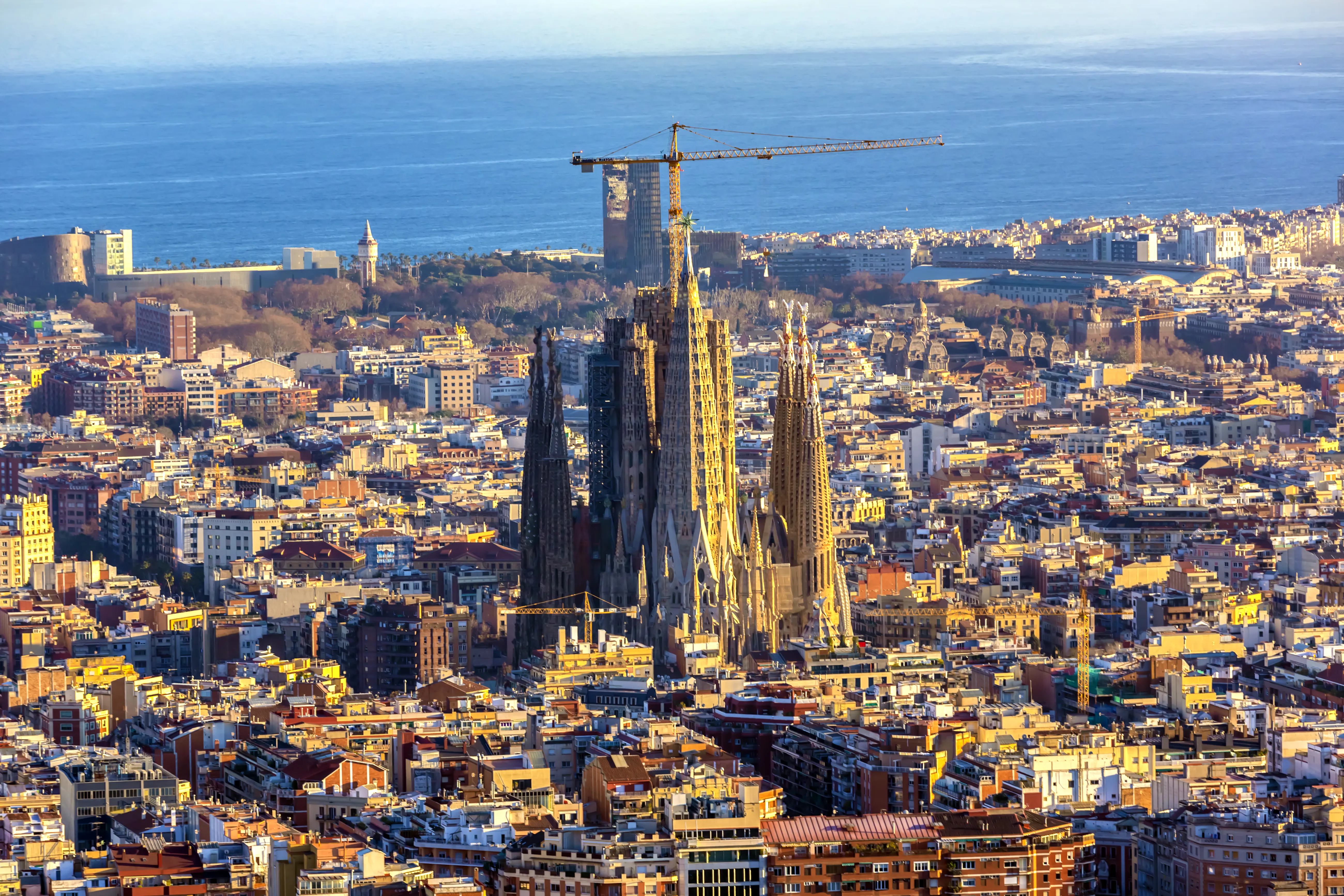
Chances are you have already visited, or at least heard of, one of the breathtaking architectural works of the Catalan architect Antoni Gaudí. You might also know that he died in 1926 and that 2026 has been officially declared the “Any Gaudí” by the Catalan Government to mark the centenary of his passing. Barcelona, for its part, has been named the 2026 World Capital of Architecture by UNESCO together with the International Union of Architects, whose World Congress will host this summer. The official programme, described as “a calendar full of art and architecture”, promises a remarkable celebration. These tributes also invite us to rediscover Gaudí, not only as an architect, but as a person. Once we enter his world, it becomes clear that what Gaudí offers goes far beyond amazing buildings and artistic beauty. A first look into his life reveals insights that resonate strongly with today’s organisations, in management, innovation and how people behave and work together. He also left reflections on sustainability and spirituality, though I will not explore those here. Thus, I would like to draw attention to seven dimensions of Gaudí’s life and work that, while not entirely unknown, remain under‑emphasised and may provide valuable perspectives.
1. Gaudí’s childhood illness shaped his way of seeing the world
When he was as young as six years old, Gaudí suffered attacks of rheumatic fever that would cause him recurrent pain throughout his life. This condition often prevented him from playing with other children, fostering instead his powers of observation, especially of nature (the “fields of Tarragona”). Later, this frailty became his greatest strength. While directing the works of the Sagrada Família, even when the project had become heavily indebted and faced huge problems, he continued to work optimistically on original technical solutions. Gaudí used to say that “adversity should never serve as an excuse for failing to do what is necessary”. Without this resilience, we cannot understand his legacy.
2. A very ordinary student, with one exceptional talent
During his adolescence, Gaudí completed his baccalaureate at the Escolapios College in Reus. Far from any stereotype of a genius, what we find is a normal young man: many failed subjects, a few high marks and many bare passes. Only in one subject did he truly stand out with an “Excellent”: Geometry. This helps us understand that, in life, sometimes all we need is the opportunity to work in what makes sense to us. We do not need to be good at everything. This simple lesson applies to both individuals and organisations.
3. Gaudí believed that meaningful work was not driven by material reward
This search for meaning was reflected in one of Gaudí’s guiding principles: according to him, “The things that are truly worthwhile are not done with material compensation in mind”. This may sound almost heretical in the context of a business school. But Gaudí held very clearly the Ignatian values of “well‑done work” and “continuous effort”. In fact, one of the most interesting ideas he left us is that of “intelligent repetition”, namely, a working principle that involves the constant refinement of our effort in the pursuit of excellence. (To give only one example, several authors suggest that Gaudí may have modified the façade of Palau Güell up to 25 times.) For him, “everyone makes mistakes, but those who make fewer mistakes are the ones who can repeat their effort systematically”. The lesson seems clear: work to change the world first, and the reward will follow.
4. Gaudí understood that organisations are driven as much by emotion as by reason
Gaudí also worked on social projects, such as the industrial complex, with factory and auxiliary buildings, for La Obrera Mataronense. Already in this project, Gaudí understood that organisations are often driven by emotion. In fact, for him, even in the relationship between two individuals, feeling predominates. He argued that there must be a balance between emotion and reflection, natural in individuals and equally necessary in organisations. From a position of respect, he said that “no one is useless, and the one who commands must know the possibilities of the one who serves”. He had a very clear vision of leadership and responsibility, inviting us to consider the role of emotions within organisations.
5. Gaudí’s innovation was rooted in the origins
Perhaps in no other field is Gaudí more celebrated than in innovation. It is no exaggeration to say that the technical solutions he developed in optics, acoustics, building materials, architectural elements, ventilation and more, have been considered revolutionary. Yet it would be more accurate to say that his work was (r)evolutionary: for him, innovation could not be understood without originality, and “true originality is a return to the origin.” He was critical of those who sought to be original for originality’s sake, arguing that “the security of things without roots is ephemeral”. Given the dramatic technical advances he introduced, the lesson seems directed at what it means to be original in our own lives. Perhaps being original means finding our place in the world by reinventing our origins.
6. Gaudí knew that inspiring others was part of his responsibility
The image of a person immersed for more than 40 years in the search for technical solutions, especially on the Sagrada Família, might seem incompatible with someone concerned with how his ideas could motivate and inspire others. But nothing could be further from the truth. Gaudí understood that part of his work was to inspire future generations with his dream. He once explained that “it would not have been possible to begin by building the Passion façade, which represents sadness, fear and pain, because it would not have attracted people”. Instead, he proposed starting with the Nativity façade, “because everything begins with it, revealing all hope and sympathy”. For the same reason, he did not want to build first the horizontal sections of the Sagrada Familia, but instead complete the first vertical zone, the first complete façade, to create the dream and emotion needed to ensure the project would continue in the future. In our own way, we all commit ourselves to projects that we hope will matter to others and can learn with Gaudí about how concluding inspiring parts of our work can catalyse new future efforts.
7. Gaudí’s death revealed the prejudice of aporophobia
On 7 June 1926, Gaudí left the Sagrada Família on foot, crossed the Passeig de Sant Joan and, as he reached the Gran Via at the height of Carrer de Bailèn, he was struck by one of two trams coming from opposite directions. Mistaken by passers‑by for a beggar (because of the dirty and old clothes he wore), he was left unattended for some time and was ignored by taxi drivers who refused to assist him, although eventually he was helped. The ambulance had instructions to take him to the Clínic Hospital, but he was taken instead to the Hospital de la Santa Creu (the “hospital of the poor”) where he was ignored until his friends identified him the following day. The voluntary poverty to which Gaudí had dedicated himself in the final years of his life while working on the Sagrada Família was punished by aporophobia.
In particular, the Sagrada Família project shows that Gaudí was a giant, not only for what he built, but for what he knew he would never live to finish. His greatness lay in understanding how small humanity is before the complexity of life and nature, and in nurturing a monumental vision even when the realities of the moment, including financial struggle, spoke against it. Honouring Gaudí and the Sagrada Família, then, is far more than a tribute to a great son of this land; it is a celebration of a civilisational milestone that has stirred and united generations, embodying the strength, conviction, and greatness of a people, from whom we all have much to learn.
Flavio Comim, PhD – Dean IQS School of Management and Full Professor at Universitat Ramon Llull